
WHY A CABLE CAR? WHAT ALTERNATIVES WERE CONSIDERED?
In Short:
A cable car combines easier summit access, fewer road trips and a small ground footprint. Rail, Bus and other road options were also assessed.
Further Context:
MWCC compared a cableway with rail systems, shuttle buses and all-terrain vehicles. The team looked at the cost of building and running each option, the space it would need, noise, energy use, passenger comfort and how well it could handle busy periods. Once the visitor experience was fully mapped out, it became very clear that both transport and visitor-facilities would need to be solved together, in an integrated way, not just to provide the safest experience, but to ensure the least ongoing disruption to park enjoyment.
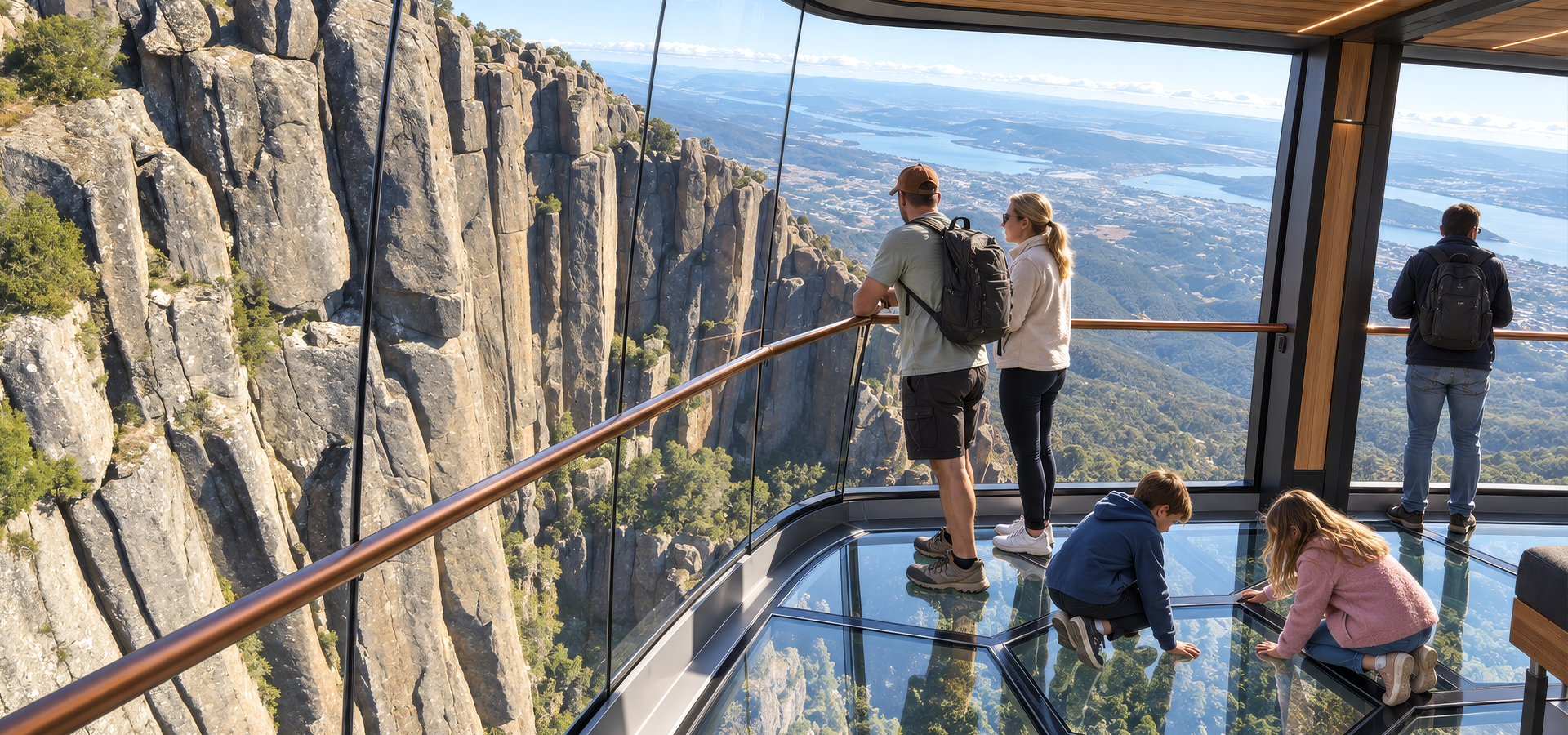
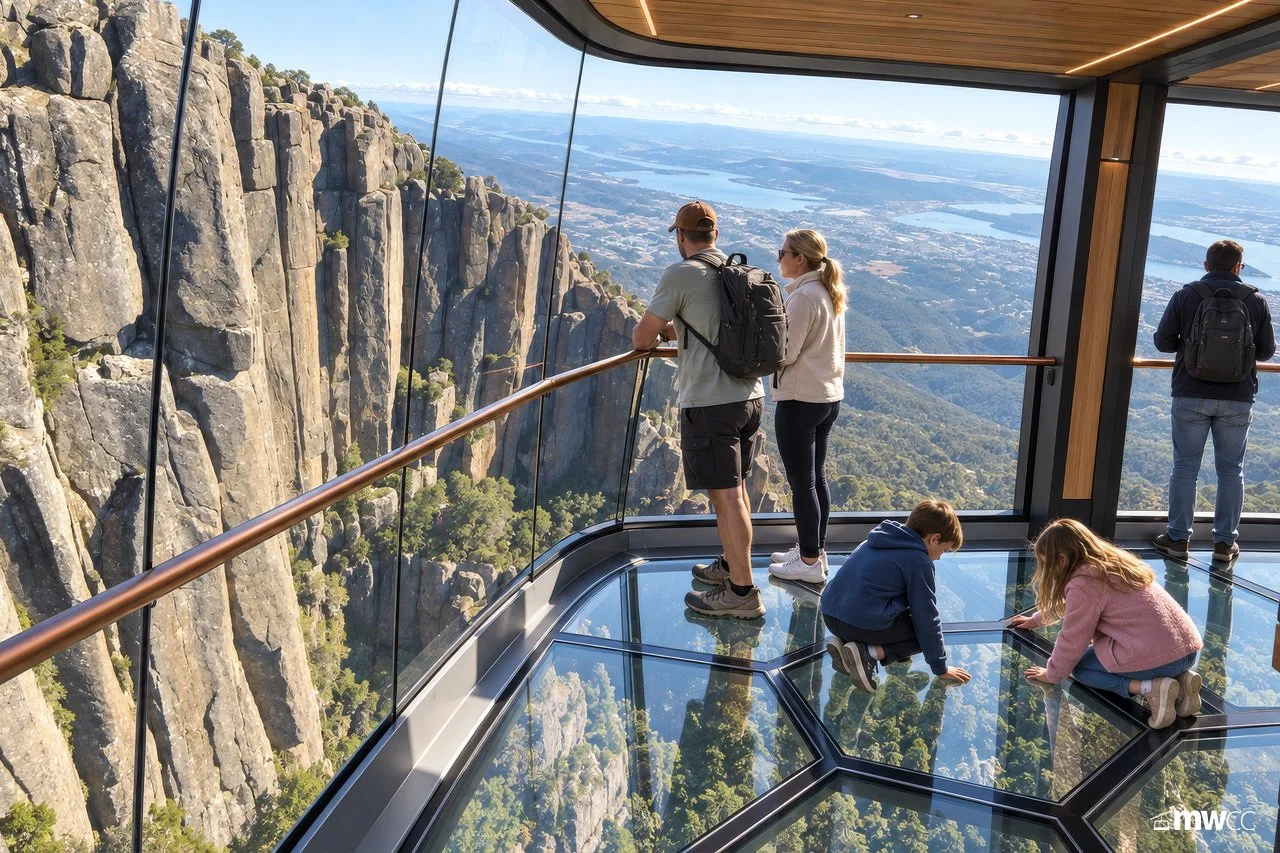
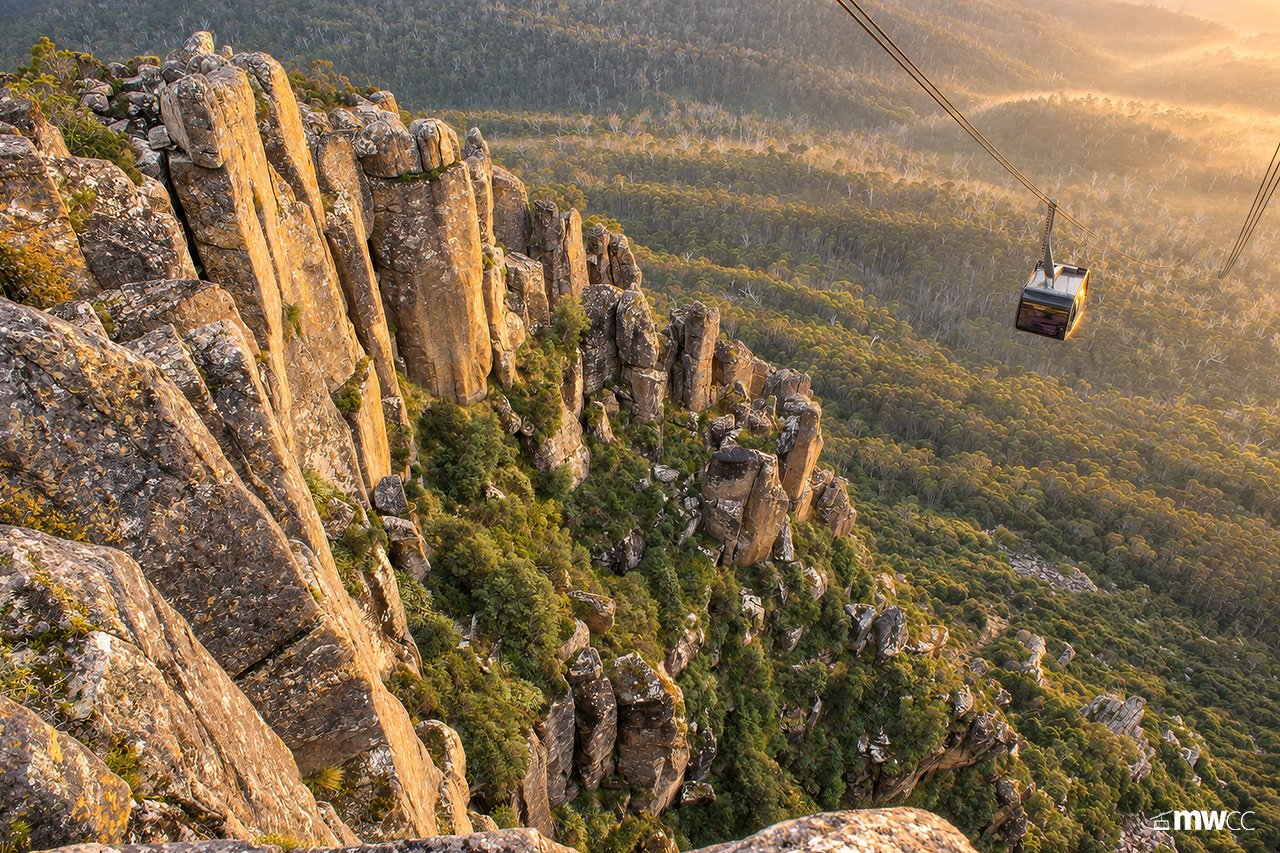
Unlike ground-based options, cableways can ascend steep ground. t also creates a memorable visitor experience capable of supporting a commercial operation, year round, without the need for additional vehicle access, parking or snow clearing at the summit.
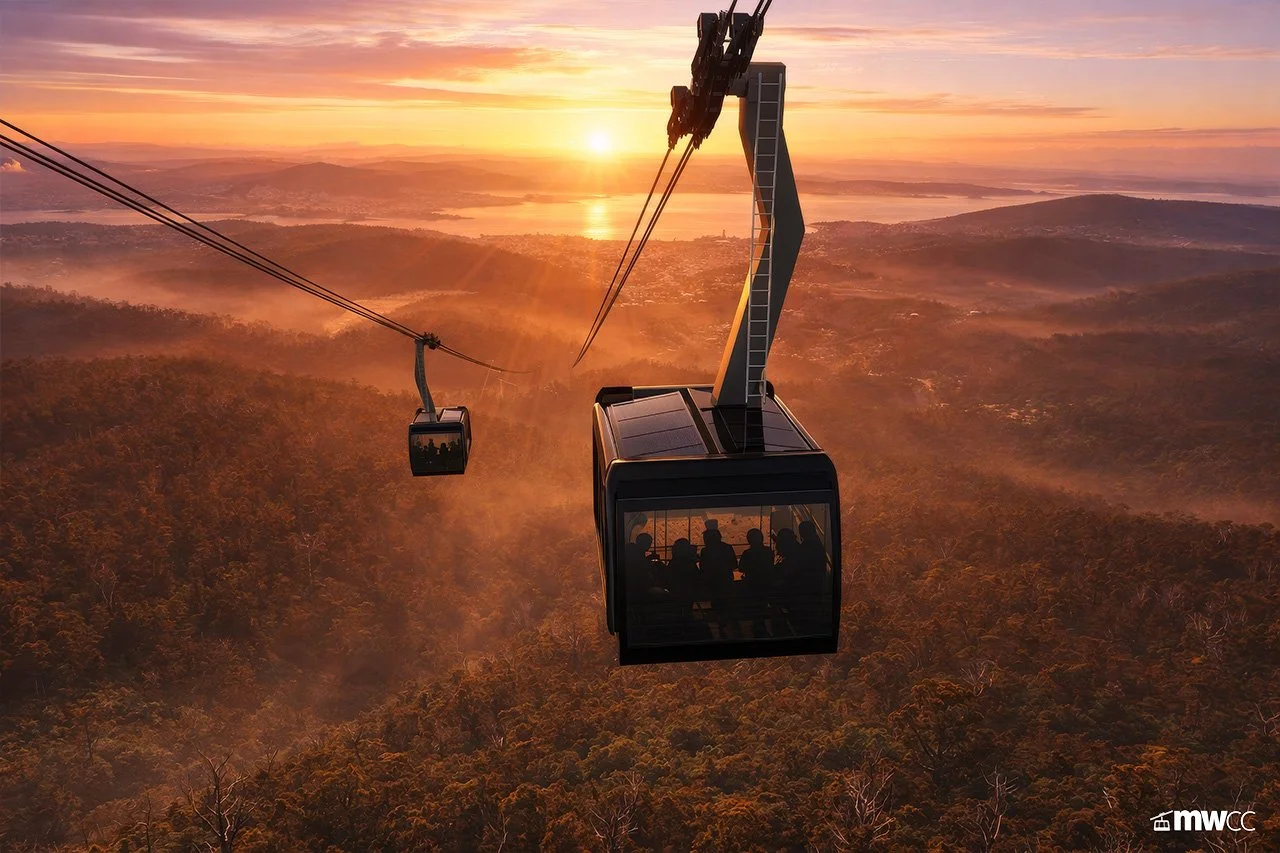
The type of cableway chosen by MWCC, an Aerial Tramway, is most suited for kunanyi/Mount Wellington. It can span long distances between towers without a road or rail track beneath it, minimises the number of towers and also carries supplies and waste for the summit facilities. Its visitor experience supports a privately funded operation with improved public facilities, lets school groups stay together, and allows the existing road to remain available for people who prefer to drive. Uniquely, it also means a visitor centre at the summit does not require additional service road access - preserving more of the alpine vegetation.
The two cabins are connected so that one travels up while the other travels down. Each runs on supporting cables, with another cable providing movement. This uses the descending cabin’s weight to help lift the other, providing excellent energy efficiency.